
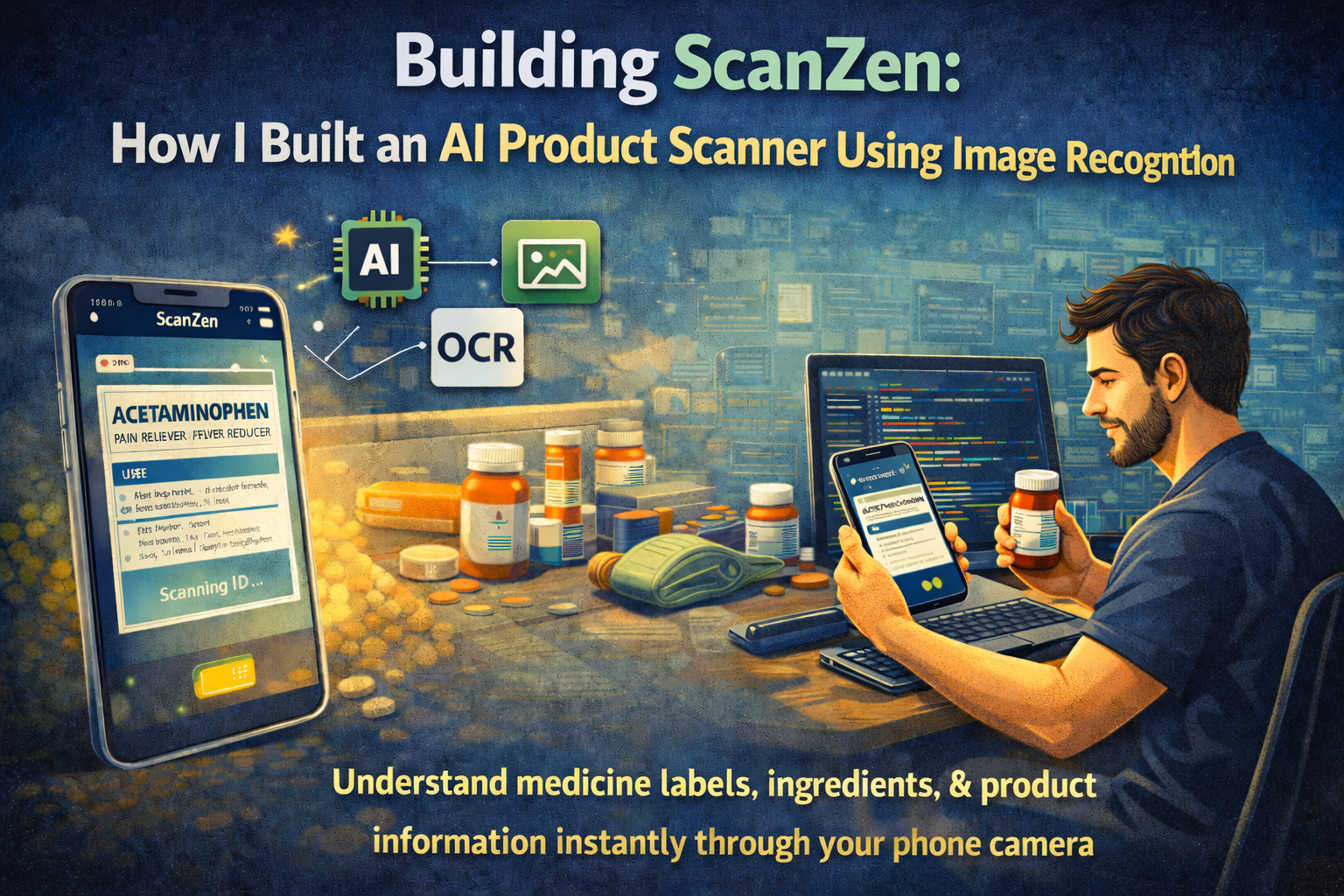
Introduction
Most people use products every day without fully understanding what’s inside them.
Medicine labels are tiny.
Skincare ingredients are confusing.
Supplement facts look like a science exam.
I built Scanzen, an AI-powered product scanner, to solve one simple problem:
👉 Help people understand products instantly by scanning them.
In this article, I’ll explain how I built Scanzen using AI image recognition, what challenges I faced, and how it works in real life.
The Problem: Why Product Labels Are Hard to Understand
Product labels are not designed for normal humans.
They are:
• Too small to read
• Filled with complex scientific terms
• Written in multiple languages
• Easy to misunderstand
This is risky, especially for:
• Medicines and dosage
• Skincare ingredients
• Supplements
• Baby care products
People often guess instead of understanding.
That guesswork can lead to side effects, allergies, or misuse.
That’s where Scanzen comes in.
What Is Scanzen?
Scanzen is an smart AI product scanner.
Users take a photo of a product label, and Scanzen instantly shows:
• Dosage instructions
• Side effects and warnings
• Ingredient breakdown
• Expiry information
• Storage guidance
• Simple explanations in the user’s language
Instead of reading complicated labels, users get clear structured information.
How I Built Scanzen Using AI Image Recognition
Step 1: Image Capture
The first step is capturing a clean image of the product label.
Scanzen accepts:
• Camera photos
• Uploaded images
• Labels in different lighting conditions
The system prepares the image for processing.
Step 2: Optical Character Recognition (OCR)
I use OCR technology to extract text from images.
This allows Scanzen to read:
• Tiny ingredient lists
• Medicine instructions
• Supplement facts
• Expiry dates
The OCR engine converts image text into digital text.
Step 3: AI Language Processing
After extracting the text, AI models analyze it.
They:
• Identify important medical terms
• Detect ingredients
• Recognize dosage patterns
• Highlight warnings
• Translate content if needed
This transforms messy label text into structured information.
Step 4: Structured Output
The final result is displayed in a simple format:
• Clear sections
• Easy bullet points
• Human-friendly explanations
Users don’t need to interpret technical jargon.
Scanzen does the thinking.
Key Features of Scanzen
Scanzen includes several features that make it useful worldwide:
Multi-language support
Scan labels in one language and get explanations in another.
Medicine safety checks
Understand dosage, risks, and precautions.
Ingredient analysis
See what’s inside skincare and supplements.
Expiry detection
Avoid using outdated products.
One-time lifetime plans
Users can pay once and use Scanzen at their own pace.
Challenges I Faced While Building Scanzen
Building an AI product scanner is not simple.
Some challenges included:
• Reading blurry or low-light images
• Handling different label formats
• Interpreting complex medical terms
• Maintaining fast response times
• Scaling the system globally
Each challenge required testing and improvement.
Scanzen continues to evolve with user feedback.
Real-World Use Cases
People use Scanzen in many ways:
• Parents checking medicines for children
• Gym users analyzing supplements
• Beauty enthusiasts scanning skincare
• Travelers translating foreign labels
• Caregivers managing prescriptions
Scanzen is designed for everyday life.
Why AI Product Scanners Are the Future
We are moving toward a world where AI helps us make smarter decisions.
AI image recognition tools like Scanzen:
• Reduce guesswork
• Improve safety
• Save time
• Increase confidence
Instead of searching online, users get answers instantly.
How Scanzen Benefits Businesses (B2B)
Scanzen is not only for consumers.
Businesses can use it for:
• Pharmacies
• Healthcare providers
• Retail product analysis
• Inventory scanning
• Customer education
This opens opportunities for global partnerships.
The Future of Scanzen
The long-term vision is to make Scanzen a global health intelligence platform.
Future plans include:
• Better ingredient risk detection
• Long-term health impact insights
• Faster multi-language support
• Enterprise integrations
• Advanced safety recommendations
The goal is simple:
👉 Help people make safer product choices.