
So why is nobody using it?
The Reality of Doing It All
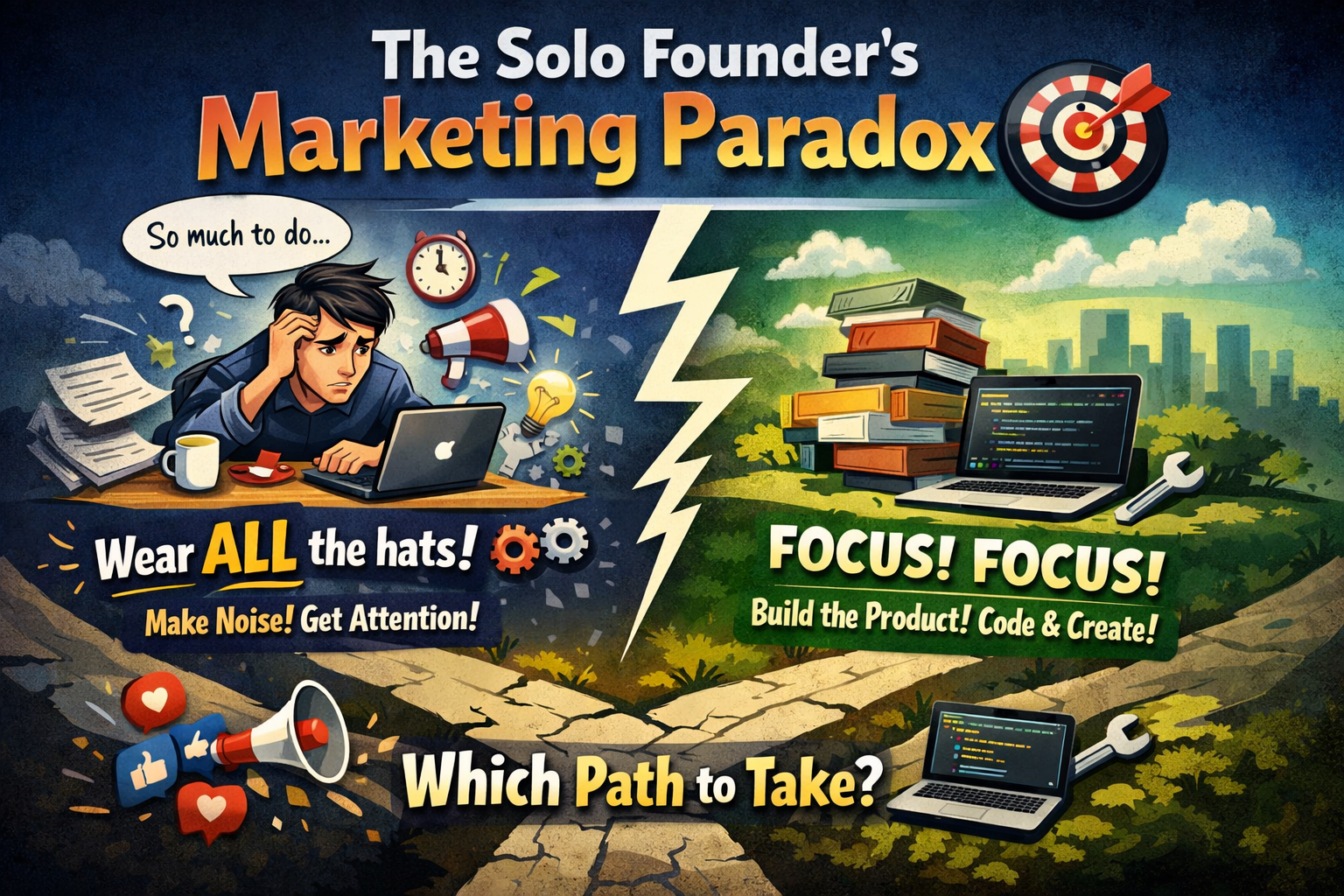
As a solo founder or indie dev, you wear every hat. You're the engineer, the marketer, the support team, and the strategist. You're context-switching between architecting features and figuring out why your Twitter post got three impressions.
The problem? You're operating at 50% capacity in every single role.
A professional marketer would focus entirely on messaging, distribution, and conversion. A full-time engineer would write cleaner code, ship faster, and innovate more. But as a solo founder, you're constantly tearing yourself away from one critical task to handle the other.
Where It Gets Painful
Building fatigue makes marketing feel like an afterthought. After eight hours of coding, the last thing you want to do is write a thoughtful blog post or engage with your community. But your product launches in silence because nobody knows it exists.
The knowledge gap is brutal. Maybe marketing wasn't your strongest suit to begin with. Now you're trying to figure out content strategy while also debugging production issues. You're not just learning, you're learning alone, at the expense of progress.
Momentum gets fragmented. You build a feature, shift to marketing for a week, then something breaks, and you're firefighting. Your marketing gets inconsistent. Your product development stutters. Neither gets the focused attention it deserves.
Imposter syndrome hits different when you're solo. You're comparing your product's marketing to brands with dedicated teams, while simultaneously doubting whether your product is even worth marketing. It's a confidence killer.
The Hard Truth
You can't do both at a professional level. But you have to do both to succeed.
The indie devs and solo founders who win aren't necessarily better at everything; they're strategic about where they focus. Some realize that scratching their own itch means they have an authentic story to tell. Others embrace simplicity in marketing and let their product's utility speak. A few hustle early on their weakest area until it's no longer the blocker.
But almost all of them make a choice: they identify which task will absolutely break the business if it's neglected, and they protect it like hell. Everything else gets optimized or outsourced, or ignored.
A Thought for Today
Your product is only half the equation. Distribution is the other half. You don't need to be an expert marketer, but you do need to be consistent about getting your product in front of people who need it.
What's your biggest struggle with managing both building and marketing? And more importantly, which one are you willing to let slip to protect the other?
The solo founder's journey isn't about being exceptional at everything. It's about being exceptional at knowing what matters most.